Entradas

Mostrando las entradas con la etiqueta ecology

Two plants of Piura Highlands are used to make filter drinks
Imagen
Photographs provided by AgroRedNorte.   Students of Nuestra Señora de las Mercedes School, at Segunda y Cajas Farmer Community (El Carmen de la Frontera District) and Innova Páramos Association, basedon Totoras Village (Pacaipampa District) presented two  filter drinks made of lanché ( Myrcianthes myrsinoides )and ushpa ( Vaccinium foribundum ),looking to blast the market of functional & nutraceutical drinks.   The products are the result of a participative investigation proposing to conserve ecosystems paramos and cloud forests at the Andes of Piura Department by using medicinal and fruit native species to make filter beverages. It has been promoted by Muqui Networ k and advised scientifically by AgroRedNorte .   They’ve been made by the own locals, this is used as a strategy to conserve the Andean highland ecosystems that are part of their territory.  The investigation is already as longer as than over a decade, it’s promoted by agroRed...

How the girls and teenagers of Piura Highlands contribute to science?

Imagen
Written and photographed by Mariluz Mejía, distributed by agrored Norte.   Girls and teenagers of Provinces Ayabaca and Huancabamba, highlands of Piura Departmen t , participate in the ethnical-botanical investigation made by Agrored Norte & Mountain Institute , funded by Peru’s National Council of Science & Technology, Ministry of environment, and Ministry of Agrarian Development & Irrigation, about the potential of wild fruit species of páramos and cloud forests .   They are high-school students of Totora school, Pacaipampa District ( Ayabaca Province ) and Cajas-Shapaya’s Virgen del Carmen School, El Carmen de la Frontera District ( Huancabamba Province ).   Those girls and teenagers mean a potential in scientific knowledge generation to value the riches of Piura Andes biodiversity, that belongs to the families living around the páramos and cloud forest ecosystems   The contribution of the girls’ knowledge  about  the ...

“sembrando Vidas” – Guillermo Checa wants to become Piura much green

Imagen
This environmental activist looks for his organization to be a world reference of reforestation.   Photographs and video provided by Guillermo Checa , distributed by FACTORTIERRA.     PIURA CITY, Peru – World forecasts about climate change are not good. All points out the humankind is accelerating the global warming as it’s stated a recent scientific consensus expressed in the so-called doomsday clock located in Chicago, Illinois.   It’s considered that planting trees could make a difference and gain time in favor of every alive being.   The key is inside two processes any tree makes – evapotranspiration and gas interchange . The first one consists in releasing the water that every vegetable consumes up to the air, turning it in steam. The second one means to converse the existent carbon dioxide around the atmosphere in oxygen . Add the shadow to this, especially at the cities.   Warming down Some sources suggest that an arb...

Visit Canchaqué and San Miguel de El Faiqué

Imagen
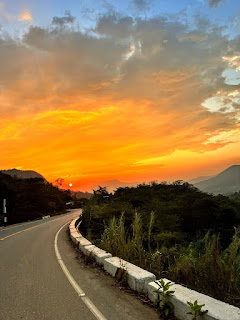
A trip to the Pre-Hispanic past, to the top of a mountain, and to the foot of a cascade.   Sunset from the top of Guayanay Mount. | All photographs provided by Andrés Facundo , distributed by FACTORTIERRA.   HUANCABAMBA, Peru – If you are in Piura City and you have a full free day, rather free at the afternoon and the following morning, here you have a tour that will bring you to the Pre-Hispanic past, raise to the top of a mountain, drown into the water flowing inside out of it.   It’s just three hours by car from Piura City (146 km or 91 miles to the east). It’s accessible around the year, although the best season is between May and October . Its difficulty levels are multiples so it easily fits to your age and current physical condition. In addition, it connects you to other very popular local attractions.   The circuit extends between Districts Canchaqué and san Miguel de El Faiqué , between 1100 meters (3600 feet) and 1270 meters (4170 feet) ...

The plague of Peruvian carob

Imagen
Tiny, voracious, it’s eating massively the leaves of the most emblematic tree of Piura.   Attacked carob trees ( Prosopis pallida ) in Cruz Verde, a town of Malingas Community , in Tambograndé, Peru, as they looked like on July 27 th , 2023. Locals told FACTORTIERRA that they also noticed defoliation of Caesalpinia paipai in the acres and Malingas Mount . All photographs along this ENTRY by Milton Garcia , distributed by FACTORTIERRA.   Again, the Peruvian carob trees ( Prosopis pallida ) are losing their leaves –specialists and activists already have a usual suspect this time, despite they couldn’t quantify the extension, yet, so the cost of the damage.   It’s about the Enallodiplosis discordis ( Diptera : Cecidomyiidae ), a kind of tiny fly from the large cecidomid genus, that seems to flourish in dry, desert climates. It was systematized in 1994 by Raymond J. Gagne for a research published by the U.S. Department of Agriculture, now in care of the Smith...