Entradas

Mostrando las entradas con la etiqueta business

Two plants of Piura Highlands are used to make filter drinks
Imagen
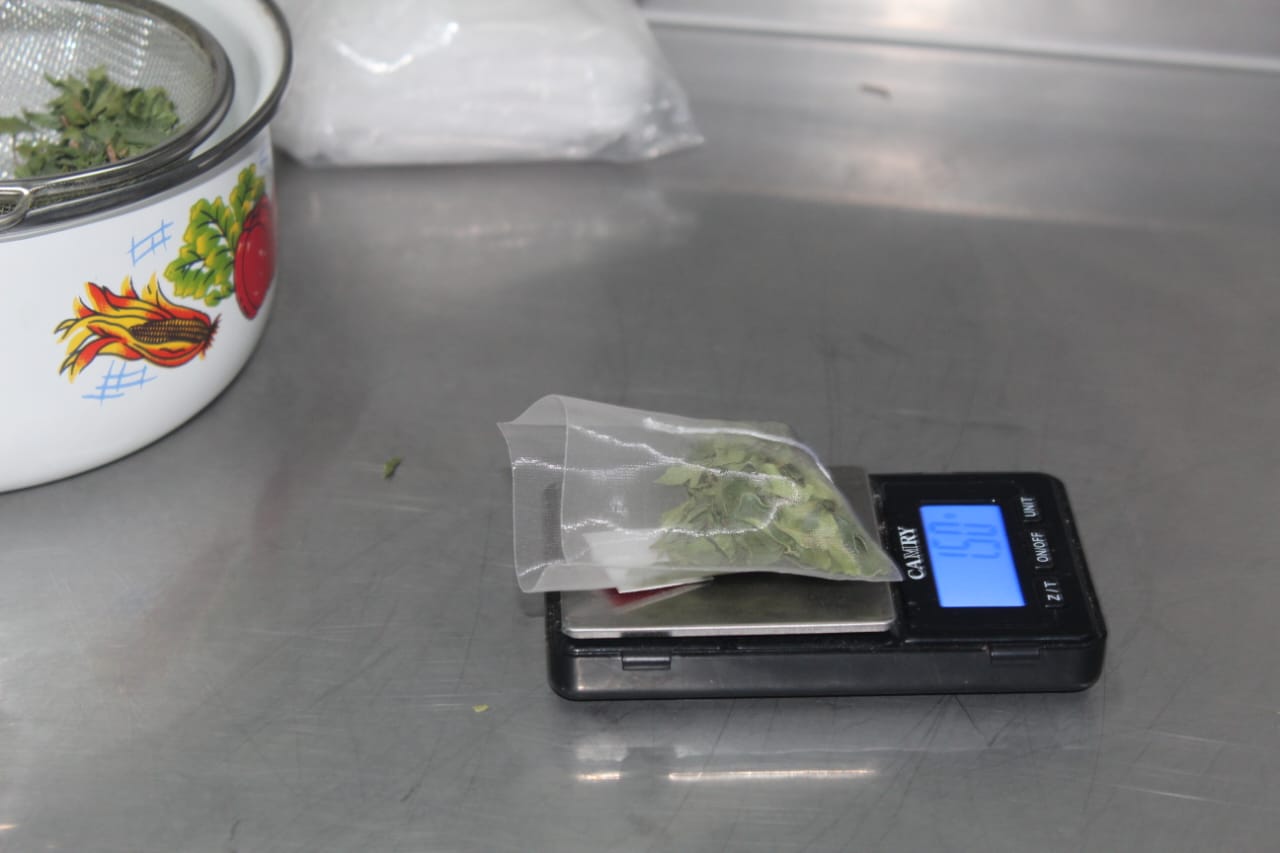
Photographs provided by AgroRedNorte.   Students of Nuestra Señora de las Mercedes School, at Segunda y Cajas Farmer Community (El Carmen de la Frontera District) and Innova Páramos Association, basedon Totoras Village (Pacaipampa District) presented two  filter drinks made of lanché ( Myrcianthes myrsinoides )and ushpa ( Vaccinium foribundum ),looking to blast the market of functional & nutraceutical drinks.   The products are the result of a participative investigation proposing to conserve ecosystems paramos and cloud forests at the Andes of Piura Department by using medicinal and fruit native species to make filter beverages. It has been promoted by Muqui Networ k and advised scientifically by AgroRedNorte .   They’ve been made by the own locals, this is used as a strategy to conserve the Andean highland ecosystems that are part of their territory.  The investigation is already as longer as than over a decade, it’s promoted by agroRed...
The banana is used for handicraft at Chira Valley

Imagen
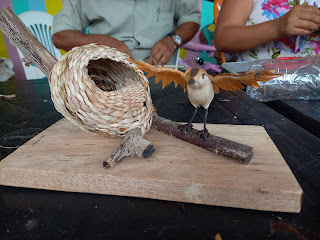
While you taste the fruit, he makes those wonders with his hands.   Photographs provided by Antony Medina , distributed by FACTORTIERRA.   SALITRAL (Sullana), Peru – In general, we believe the banana process finishes when we consume it as fruit or preparation – a shake or an ice-cream, for example. However, the fiber forming its trunk can have more lives than a cat.   What we believe it’s the trunk  of a banana plant, it’s actually layers of leaves surrounding the real trunk, once the plant goes growing up, they go displaying. The fiber comes out from there, whether the layer is green or dry.   The fiber can be used in sheets or threads, even. Its products are many – from utilitarian objects to clothes, passing through handicraft. In fact, if the banana thread is mercerized, it comes out a cloth with a texture quite similar to denim, and if the fiber is thinner, the texture is similar to silk. In both cases, the mercerized thread is hard to brea...

The unlucky rice

Imagen
Its growers complain of importation – it’s one of their many problems.   By Nelson Peñaherrera Castillo   PIURA CITY, Peru – At a chifa near Merino Square, our graphic producer and I have dinner. I order my favorite, pork and tamarind. Him, a chaufa , that is not more than grained rice and a put-on egg, spiced with soja sauce also known as sillao , [siyao] and it was added boiled little cubes of beef or chicken.   The chifa is one of the most celebrated culinary fusions of Peruvian gastronomy. It’s about the kitchen techniques mainly imported from Canton region, China, with the products brought by the Spaniards beginning 16 th century, and that got to adapt to the lands and climate of Peru.   This type of food is just a century old when Chinese inmigrants started it here, as they were recruited to work in slavery conditions mainly at reedbeds of Lambayequé and La Libertad. The chifa food is not cheap. A plate at a good restaurant, like the one ...

Who didn't move my cheese?

Imagen
Although goat cattle predominates in Piura Coast, it does not consolidate a market for competing beyond its boundaries yet. All photos by William Curay , provided to FACTORTIERRA. MARCAVELICA, Peru - Taking advantage of September 24th Piura 's holiday, in Cañas Village an habit has been started during the last years: having a fair dedicated to goat cattle. It is about  one of the three towns benefit with projects to generate productive chains around the milk of those animals brought by the Spaniards in 16th century, those found a pretty good environment at lowlands here. Cañas is about 25 km or 15.5 miles to the north of Mallarés Town, what is 13 km or 8,8 miles to the northwest of Sullana City.  The road is easily accessible as light as it rains. In Peru, approximately 210,000 families work and depend on growing goats. The majority of those little growers have unsatisfied basic needs. In Piura case, the majority live at Equatorial Dry Forest , a coastal ecosystem...

Sweet Task

Imagen
The ecologic sugar is one of the healthy and exportable choices of Piura. Photos Courtesy Comunicaciones Piura . PIURA CITY, Peru - It seems to be a titanic challenge but somebody has to do it: sweetening everything that can be sweetened not increasing one pound of body weight. The stebia is already a solution available in the local market but its price continues a bit expensive above than conventional sugar. The choices are giving up or following in search of another natural option, reasonable price… and that gets the task of keeping healthy especially in a region where the levels of diabetes or heart-related diseases are high in Peruvian context. Maybe that option is the granulated pan , the evaporated and crystalized sugarcane juice for obtaining pure sucrose . There is no more process to do, not chemical at least. The home of the granulated pan in Peru seems to be Piura Region and specifically midlands of Ayabaca and Huancabamba Provinces.  For the lifetime, it ...